
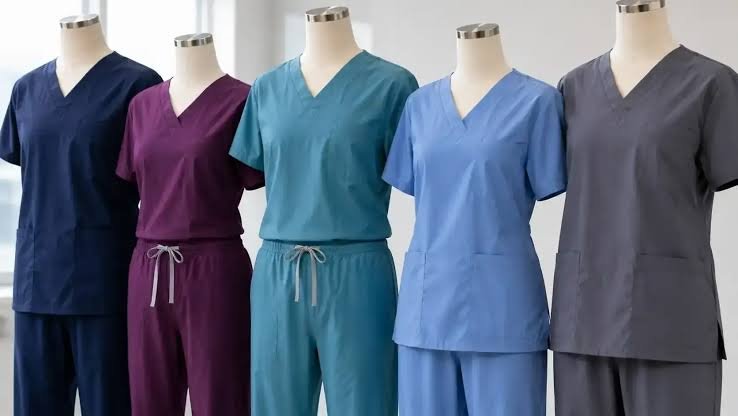
The healthcare apparel market has undergone a significant transformation in recent years. Standard, boxy, one-size-fits-all uniforms are rapidly being replaced by stylish, functional, and ergonomically designed garments tailored to the specific needs of healthcare institutions and brands. Entering the domain of custom medical scrub manufacturing allows businesses, hospital networks, and private practices to develop uniform solutions that enhance brand identity, improve practitioner comfort, and meet stringent hygiene standards.
From initial design concepts to high-volume production, the journey of creating tailor-made healthcare uniforms involves precise engineering, careful fabric selection, and thorough quality assurance. Understanding this multi-step manufacturing life cycle helps brands navigate the complexities of product development effectively.
The Evolution of Healthcare Apparel
Historically, medical scrubs were designed primarily for utilitarian purposes: ease of laundering, basic coverage, and low production costs. However, modern healthcare professionals spend long hours in high-stress environments, demanding garments that provide physical comfort, movement flexibility, and durability.
The growth in demand for custom medical scrub manufacturing stems from several critical factors:
- Brand Differentiation: Clinics, hospitals, and wellness centers use custom colors, trims, and logo placements to present a cohesive visual identity.
- Ergonomic and Functional Needs: Specialized medical fields require tailored pocket configurations, moisture-wicking technology, and anti-microbial treatments.
- Diverse Sizing Demands: Custom manufacturing accommodates body-inclusive sizing, ensuring every team member experiences proper fit and mobility.
Phase 1: Conceptualization and Design Development
Every garment line starts with an initial concept. In custom medical scrub manufacturing, the design phase serves as the foundation for both aesthetic appeal and practical performance.
Defining Functional Requirements
Before sketching, designers and product development teams establish the functional goals of the garment. Key considerations include:
- Pocket Architecture: Strategically placed chest, cargo, and hidden security pockets tailored to modern tools like smartphones, stethoscopes, and penlights.
- Fit Profile: Selecting between modern tailored silhouettes, classic unisex cuts, or athletic-inspired fits featuring ribbed cuffs and jogger pants.
- Ergonomic Seaming: Incorporating princess seams, back yokes, and side vents to promote fluid movement without binding.
Tech Pack Creation
Once design sketches are finalized, tech packs (technical packages) are created. A tech pack serves as the master blueprint for production. It includes:
- Detailed flat sketches showing front, back, and seam details.
- Bill of Materials (BOM) listing fabrics, threads, zippers, buttons, and drawstrings.
- Measurement spec sheets covering all intended size gradations.
- Specific instructions for stitch types, seam allowances, and label placements.
Phase 2: Material Sourcing and Fabric Selection
Fabric choice directly dictates garment performance, durability, and comfort. Custom medical scrub manufacturing relies on specialized textile engineering to handle frequent high-temperature industrial laundering while maintaining color retention and softness.
Popular Fabric Blends
- Polyester-Rayon-Spandex (Poly-Rayon-Span): The modern industry standard for premium scrubs. Polyester supplies durability and wrinkle resistance; rayon provides softness and drape; spandex delivers four-way stretch.
- Cotton-Polyester Blends: A durable, budget-friendly option that combines the natural breathability of cotton with the tear strength of synthetic fibers.
- 100% Microfiber Synthetic: Lightweight and quick-drying, ideal for high-sweat surgical or emergency room environments.
Performance Enhancements and Textile Finishes
To meet healthcare standards, technical fabric treatments are frequently integrated during the textile phase:
- Antimicrobial Coatings: Fabrics treated with silver-ion or zinc-based agents help inhibit bacteria growth and control odor.
- Fluid Barrier Technologies: Water-repellent and stain-resistant finishes help protect wearers from liquid exposure.
- Moisture-Wicking Construction: Capillary-action knits draw sweat away from the body toward the outer surface of the garment for rapid evaporation.
Phase 3: Pattern Making, Grading, and Prototyping
Translating two-dimensional tech packs into three-dimensional garments requires precise pattern making and sample construction.
Pattern Creation and Size Grading
Pattern makers create digital patterns using Computer-Aided Design (CAD) software based on the tech pack specs. Once the base size pattern (typically Size Medium) is finalized, CAD grading systems expand and reduce the pattern to generate the full size range—from XS to 5XL. Accurate pattern grading ensures that proportions, pocket placements, and seam lines adjust naturally across different body types.
Sample Development and Fitting Reviews
Before full production begins, the factory builds physical samples (proto samples). Product managers and fit models test these prototypes for:
- Range of motion during bending, reaching, and stretching.
- Seam strength and comfort against skin.
- Visual balance of pockets, collars, and brand accents.
Revisions are noted, patterns are adjusted, and a pre-production sample (PPS) is produced for final approval.
Phase 4: Bulk Manufacturing and Assembly
After pre-production samples are approved, mass production begins. Modern facilities specializing in custom medical scrub manufacturing employ streamlined assembly lines to maintain quality across high volume runs.
Fabric Spreading and Precision Cutting
Automated spreading machines lay out dozens of fabric layers evenly onto long cutting tables. Computerized cutting blades then slice through the stacked layers using CAD pattern files, ensuring sub-millimeter precision across thousands of cut panels.
Assembly Line Stitching
Cut fabric pieces are distributed to specialized sewing lines. Modern scrub construction incorporates robust stitching techniques:
- Safety Stitching / Overlocking: Prevents fabric edges from fraying under tension.
- Double-Needle Topstitching: Reinforces high-stress areas like pockets, side seams, and sleeve armholes.
- Bar-tacking: Adds dense stitch clusters at pocket corners and seam ends to stop tearing.
Custom Branding and Trim Integration
Branding elements are applied during or immediately following assembly:
- Custom Embroidery: Direct-to-garment stitching for institutional logos and individual employee names.
- Heat-Transfer Labels: Tagless neck labels printed directly on the fabric to prevent skin irritation.
- Custom Hardware: Branded drawstrings, metal aglets, and custom woven waistbands.
Phase 5: Quality Control, Finishing, and Packaging
Quality control (QC) is an ongoing process executed at multiple checkpoints throughout custom medical scrub manufacturing.
Quality Inspection Criteria
- Dimensional Accuracy: Measuring finished garments against specs to ensure sizing remains consistent.
- Visual Checks: Inspecting for loose threads, skipped stitches, color variations, or surface defects.
- Hardware Functionality: Testing drawstrings, snaps, zippers, and elastic bands for operational reliability.
Finishing and Distribution Prep
Once passed through QC inspections, garments are trimmed of loose threads, professionally ironed or steam-pressed to remove wrinkles, and folded. Individual pieces are packaged in protective poly bags featuring barcode labels for inventory tracking, ready for direct shipping to clinics, distributors, or retail distribution centers.
Conclusion
The workflow of custom medical scrub manufacturing bridges functional utility with modern apparel design. By navigating each stage—from initial concepts and technical packs to material selection, prototyping, precision cutting, and quality control—brands can produce high-performing medical uniforms. Investing in custom production yields garments that fit well, endure demanding clinical conditions, and elevate the professional image of healthcare teams.