
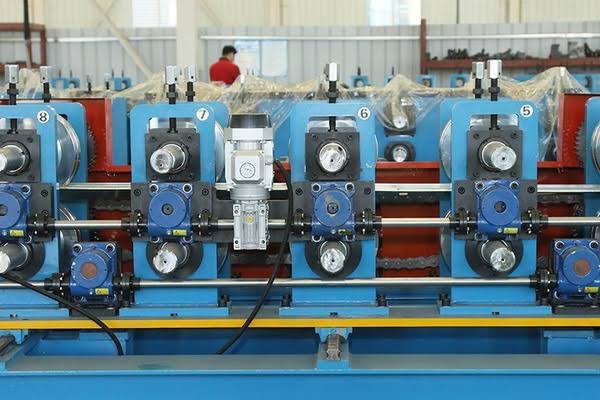
The steel construction industry continues to grow as businesses seek stronger, more durable, and cost-effective building solutions. From industrial warehouses and commercial buildings to factories and agricultural structures, steel components play an essential role in modern construction. Among these components, CZ purlins are widely used because of their strength, flexibility, and ability to support roofing and wall systems. To manufacture these structural elements efficiently, many manufacturers rely on a CZ purlin roll forming machine.
This advanced equipment is designed to produce C-shaped and Z-shaped steel purlins with consistent dimensions and high precision. It helps manufacturers improve production efficiency, reduce material waste, and maintain product quality. Investing in the right machinery can provide several advantages for businesses involved in steel fabrication and construction. Understanding these benefits can help manufacturers make better decisions and improve their overall production capabilities.
1. High Production Efficiency
One of the most important benefits of using a CZ purlin roll forming machine is its ability to manufacture steel purlins quickly and efficiently. Traditional manufacturing methods often require multiple operations, including cutting, bending, and shaping. These processes can consume significant time and labor.
A roll forming machine combines several production stages into a continuous operation. Steel coils pass through a series of rollers that gradually shape the material into the required C or Z profile. This automated process allows manufacturers to produce large quantities of purlins within a shorter period.
Higher production speeds help businesses meet tight construction deadlines and handle larger orders without significantly increasing their workforce. As a result, companies can improve productivity and strengthen their competitive position in the steel construction market.
2. Accurate and Consistent Purlin Dimensions
Precision is essential in steel construction because structural components must fit together correctly. Even small dimensional differences can create installation difficulties and affect the overall stability of a building.
A modern CZ purlin roll forming machine uses carefully designed rollers and automated control systems to maintain consistent product dimensions. Manufacturers can adjust the machine according to specific requirements, including profile height, flange width, and material thickness.
This level of accuracy ensures that each purlin meets the required specifications. Consistent manufacturing also reduces the need for additional adjustments during installation, helping construction teams complete projects more efficiently.
3. Flexible Production of C and Z Purlins
Another major advantage is the flexibility to manufacture both C-shaped and Z-shaped purlins using the same production system. These two profiles serve different purposes in steel construction.
C purlins are commonly used in wall framing, roof structures, and supporting applications where straightforward installation is required. Z purlins are frequently used in roofing systems, particularly where overlapping connections provide additional structural advantages.
A versatile CZ purlin roll forming machine allows manufacturers to switch between different profiles according to customer requirements. This flexibility reduces the need to purchase separate production equipment for each profile type.
Businesses can therefore expand their product range, serve different construction markets, and respond more effectively to changing customer demands.
4. Reduced Material Waste
Material costs represent a significant portion of manufacturing expenses. Therefore, reducing steel waste is an important priority for companies involved in purlin production.
Roll forming technology helps minimize unnecessary material loss by shaping steel coils through a controlled and continuous process. Unlike some traditional fabrication methods, it does not require excessive cutting or repeated adjustments to achieve the desired profile.
Modern machines also offer precise cutting systems that help produce purlins according to specified lengths. Accurate measurements reduce unnecessary offcuts and improve material utilization.
By minimizing waste, manufacturers can lower production expenses and increase profitability. Efficient material usage also supports more sustainable manufacturing practices by making better use of available steel resources.
5. Lower Labor and Operating Costs
Labor expenses can have a considerable impact on manufacturing profitability. Traditional purlin production may require several workers to operate different machines and complete individual processing stages.
A CZ purlin roll forming machine can automate many of these operations. Depending on its configuration, the equipment may include automatic feeding, leveling, punching, roll forming, and cutting systems.
Automation reduces the amount of manual work required throughout the production process. Operators can supervise machine performance, monitor production settings, and manage quality checks rather than performing repetitive fabrication tasks.
Although the initial investment may be significant, reduced labor requirements and improved production efficiency can help businesses achieve long-term savings.
6. Strong and Reliable Structural Components
The quality of steel purlins directly influences the performance of roofing and wall support systems. These components must withstand different structural loads and environmental conditions throughout their service life.
A CZ purlin roll forming machine produces accurately shaped steel profiles with consistent dimensions. The gradual forming process helps maintain the intended cross-sectional geometry when the equipment is correctly designed and operated.
Manufacturers can select suitable steel grades and thicknesses according to project specifications. Combined with proper engineering and quality control, this approach helps produce reliable structural components for different construction applications.
High-quality purlins contribute to durable building frameworks and support the long-term performance of steel structures.
7. Easy Customization and Production Adjustments
Construction projects often have different structural requirements. Some buildings require lightweight purlins, while others need stronger profiles with specific dimensions and thicknesses.
Modern roll forming systems offer adjustable settings that allow manufacturers to produce different purlin sizes and configurations. Depending on the machine design, operators can modify profile dimensions, punching positions, and cutting lengths.
This customization makes it easier for manufacturers to handle specialized orders without completely changing their production setup.
A flexible CZ purlin roll forming machine is particularly useful for companies serving multiple industries, including commercial construction, industrial development, agricultural buildings, and prefabricated steel structures.
8. Improved Production Safety
Workplace safety is another important consideration in steel manufacturing. Traditional fabrication methods often involve repeated manual handling, material movement, and operation of separate processing equipment.
Automated roll forming systems can reduce direct operator involvement in several production stages. Features such as protective guards, emergency stop buttons, safety sensors, and controlled feeding mechanisms help create a safer working environment.
However, proper operator training and regular equipment inspections remain essential. Workers should follow manufacturer guidelines and use appropriate protective equipment when handling steel coils and finished purlins.
By combining automation with suitable safety procedures, businesses can reduce operational risks and improve workplace organization.
9. Better Return on Investment
Purchasing industrial machinery requires careful financial planning. Businesses need to consider equipment costs, installation expenses, maintenance requirements, and expected production demand.
A CZ purlin roll forming machine can provide a strong return on investment when used for consistent production. Higher output, reduced labor expenses, improved material utilization, and fewer manufacturing errors can contribute to lower costs per unit.
Furthermore, the ability to manufacture multiple purlin profiles can create additional revenue opportunities. Businesses can serve different customer segments and accept a wider variety of construction-related orders.
Choosing equipment that matches actual production requirements is essential for maximizing long-term financial benefits.
10. Wide Applications in Modern Steel Construction
CZ purlins are used in numerous construction projects because they provide practical support for roofing and wall systems. Their versatility makes them suitable for different building types and structural designs.
Common applications include:
- Industrial warehouses and manufacturing facilities.
- Commercial buildings and shopping centers.
- Agricultural sheds and storage facilities.
- Factories and production plants.
- Steel-framed workshops and garages.
- Prefabricated buildings and modular structures.
- Large roofing and cladding systems.
A reliable CZ purlin roll forming machine allows manufacturers to supply these markets with consistently produced structural components. As demand for steel construction continues to increase, efficient purlin manufacturing can become an important business opportunity.
11. Choosing the Right Machine for Long-Term Success
Although the benefits of roll forming technology are considerable, selecting the right equipment is essential. Manufacturers should evaluate several factors before purchasing a machine.
First, consider the required production capacity and the types of purlin profiles needed. The machine should support the necessary material thicknesses, dimensions, and production speeds.
Second, examine the quality of the rollers, forming stations, cutting systems, and control components. Durable construction and reliable automation can improve machine performance and reduce unexpected downtime.
It is also important to evaluate technical support, spare parts availability, installation assistance, and maintenance services. Working with an experienced equipment supplier can help businesses choose a system that meets their operational requirements.
Conclusion
The use of a CZ purlin roll forming machine offers significant advantages for manufacturers involved in modern steel construction. From improved production speed and dimensional accuracy to reduced material waste and lower labor costs, this equipment supports efficient and reliable manufacturing operations.
Its ability to produce both C-shaped and Z-shaped profiles also provides greater flexibility, allowing businesses to serve different construction applications and customer requirements. Additionally, automation, customization options, and consistent product quality contribute to long-term operational improvements.
As the construction industry continues to adopt advanced steel building solutions, investing in suitable roll forming technology can help manufacturers improve productivity, control expenses, and remain competitive. Choosing a high-quality machine based on production needs is an important step toward achieving sustainable growth and long-term success in steel fabrication.