

An Unexpected Manhattan Journey from Nature to Commerce
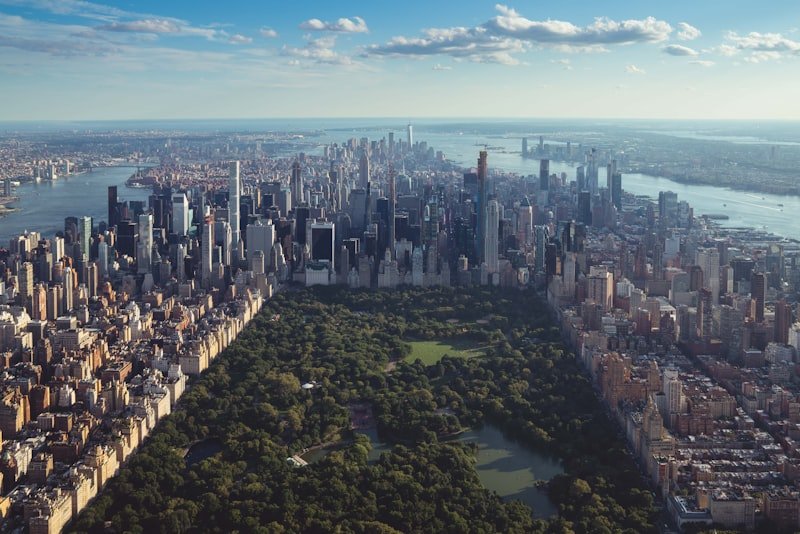
Manhattan’s greatest talent is surprise. The island consistently defies the expectations that outsiders project onto it — and nowhere is this more evident than in the contrast between its southern green spaces and its northern commercial temples. A single subway ride can transport you from a waterfront park where herons fish in tidal pools to a department store where personal shoppers curate wardrobes for the global elite. This is not a contradiction. This is Manhattan.
This article traces a journey from the green spaces of Downtown to the commercial corridors of Midtown, with stops at the coffee shops and department stores that make both experiences distinctly Manhattan. Along the way, we will explore how these seemingly disparate elements connect — and why understanding their relationship is essential for anyone who wants to experience the island fully.
Downtown’s Green Sanctuaries
When most people think of Downtown Manhattan, they think of Wall Street, skyscrapers, and the 9/11 Memorial. What they rarely think of is trees, grass, and open sky. Yet Downtown hosts some of the most thoughtfully designed urban green spaces on the island — parks that serve as critical psychological counterweight to the intensity of the surrounding financial district.
Battery Park, at the island’s southern tip, is the oldest — its origins trace back to the earliest days of New Amsterdam. The park offers harbor views, ferry access to the Statue of Liberty and Ellis Island, and a surprisingly diverse ecosystem of migratory birds that use the park as a rest stop during spring and fall migrations. For the office workers of the Financial District, Battery Park serves as the closest thing to a lunch-hour escape — a place where the noise of the trading floor is replaced by the sound of waves against the seawall.
Battery Park City, the planned residential neighborhood built on landfill west of the World Trade Center site, includes a ribbon of waterfront parks that stretches along the Hudson River. These parks — Rockefeller Park, Teardrop Park, and the Esplanade — provide running paths, playgrounds, and carefully landscaped gardens that serve the area’s growing residential population. The parks here are not afterthoughts — they are primary design elements that were planned alongside the residential towers they serve.
For a full accounting of Downtown Manhattan’s parks and green spaces, the directory provides detailed information on each space, including amenities, hours, and programming. What the directory cannot capture is the sensory experience of these parks — the way the afternoon light hits the harbor, the sound of children playing in Rockefeller Park’s water feature, the smell of salt air mixed with roasting coffee from the nearby shops.
The Coffee Break: Downtown’s Best
After a morning spent exploring Downtown’s green spaces, the natural next step is a stop at one of the area’s exceptional coffee shops. The coffee shops of Downtown Manhattan have developed a character that reflects the neighborhood’s dual identity — part financial district efficiency, part residential neighborhood warmth.
In the morning hours, these shops fill with bankers and traders grabbing espresso on their way to the office. By midday, the crowd shifts to include Battery Park City residents with strollers and dogs, freelancers from nearby coworking spaces, and tourists who have wandered south from the 9/11 Memorial. In the evening, the atmosphere softens further — laptops close, conversation volumes rise, and the coffee shop transforms into something closer to a neighborhood living room.
Downtown Manhattan’s coffee shops are mirrors of the neighborhood itself — professional and polished during business hours, warm and relaxed in the evenings, and always evolving.
The Transit Bridge: Moving Between Worlds
The subway ride from Downtown to Midtown is one of the most psychologically transformative journeys in urban life. In the space of 15 to 20 minutes, you travel from a neighborhood defined by history and repose to one defined by velocity and ambition. The 1/2/3 express train from Chambers Street to 42nd Street–Times Square covers this transition so efficiently that you barely have time to adjust your mental framework before the doors open and you are immersed in a completely different world.
This transition is part of what makes Manhattan extraordinary. In most cities, shifting between a waterfront park and a major commercial district requires a car, a highway, and 30 to 45 minutes of suburban sprawl. In Manhattan, it requires a $2.90 subway fare and the patience to stand for a few stops. The accessibility is not just convenient — it is economically and socially transformative, creating pathways for interaction between communities that would otherwise remain siloed.
Midtown: The Commercial Cathedral
Emerging from the subway at 42nd Street, you enter a Midtown that operates at a fundamentally different frequency than Downtown. The streets are wider, louder, and more densely packed with people. The buildings are taller. The energy is more acute. And the commercial options — from the flagship stores of Fifth Avenue to the specialty shops of Madison Avenue — represent the most concentrated expression of consumer capitalism on earth.
The department stores of Midtown Manhattan are more than retail outlets — they are cultural institutions. Saks Fifth Avenue, with its Art Deco facade and ten floors of curated merchandise, has been defining American luxury retail since 1924. Bergdorf Goodman, occupying a neoclassical building on the southeast corner of Central Park, offers an experience so rarefied that even browsing feels like an event. Macy’s Herald Square, the world’s largest department store by floor area, is a democratic counterpoint — a place where middle-class families, tourists, and fashion students all share the same aisles.
The Department Store Experience
What separates Manhattan’s department stores from their counterparts in other cities is the investment in experience. These are not warehouses of merchandise arranged for maximum efficiency. They are staged environments where lighting, music, scent, and spatial design all work together to create an atmosphere that makes the act of shopping feel like a cultural activity rather than a commercial transaction.
The holiday season transforms these stores into something even more extraordinary. The window displays at Saks, Bergdorf, and Macy’s are works of narrative art — intricate mechanical installations that tell stories through animatronics, lighting, and music. Millions of people visit these displays annually, and the tradition has become one of Manhattan’s most beloved seasonal rituals.
But the department store’s relevance extends beyond spectacle. For many consumers, the personal shopping service offered by these institutions provides a level of expertise and attention that no algorithm can match. A Bergdorf personal shopper does not merely suggest products — they build relationships with clients over years, understanding their preferences, their body types, their professional requirements, and their evolving tastes in a way that makes every recommendation feel personal rather than programmed.
The Full Circle
The journey from Downtown’s green spaces to Midtown’s commercial corridors is, in miniature, the journey that defines the Manhattan experience. The island asks you to hold contradictions in productive tension: nature and commerce, history and innovation, community and ambition. These are not opposing forces — they are complementary ones, each making the other more meaningful.
A morning spent in Battery Park City’s waterfront gardens followed by an afternoon in Midtown’s retail temples is not a study in contrast — it is a demonstration of range. Manhattan’s genius is that it offers both extremes within a single day, connected by a transit system that makes the journey effortless.
For those planning this journey, the resources are readily available. The Manhattan business directory provides detailed listings of Downtown parks, Downtown coffee shops, and Midtown department stores, allowing you to plan an itinerary that flows naturally from one experience to the next. The only variable is your willingness to walk, explore, and let Manhattan surprise you — which, if the island has taught us anything, it inevitably will.
Turning the Route Into a Full-Day Itinerary
A Downtown-to-Midtown day works best when it is built around changes in pace. Start with a park or waterfront walk while the city is still opening. Move into a coffee shop for a slower planning moment, then use transit or a long walk north toward the commercial energy of Midtown. By the time the route reaches the department store district, the day has shifted naturally from open space to shopping, from neighborhood calm to metropolitan scale.
This sequence is useful because it reflects how Manhattan actually functions. The island is not experienced only through destinations; it is experienced through transitions. A visitor who moves from a Downtown green space to a Midtown retail corridor sees the contrast that makes Manhattan memorable: public space, private enterprise, transit, architecture, and pedestrian life all layered into a single route.
What to Check Before You Go
Before planning the day, check hours, weather, accessibility, and distance between stops. Some parks are best in the morning. Some coffee shops are crowded during office rush periods. Department stores may have special events, holiday windows, or limited service hours in certain departments. A small amount of planning prevents the most common problem in Manhattan: spending more time correcting the route than enjoying it.
Families should also consider restrooms, stroller access, and places to sit. Solo visitors may prioritize quiet corners and flexible stops. Business travelers may need a route that allows quick calls or a laptop break between appointments. The same set of places can support very different days when the details are chosen carefully.
Why This Combination Works
Parks, coffee shops, and department stores may seem unrelated, but together they show the range of Manhattan’s public life. One offers space to pause, one offers a social and practical bridge, and one offers the intensity of urban commerce. Experiencing all three in one route gives a fuller picture than visiting only landmarks.
Seasonal Planning Makes the Route Better
The same Downtown-to-Midtown route feels different depending on the season. Spring and early fall are ideal for longer walks, waterfront pauses, and park time. Summer rewards shaded routes, indoor breaks, and earlier starts before the afternoon heat settles between buildings. Winter shifts the value toward department stores, indoor coffee stops, and shorter outdoor segments. The route does not need to change completely, but the timing and pace should.
Weather also affects the role of each stop. A park can be the center of the day in good weather and a short scenic pause in colder months. A coffee shop can be a planning stop, a warm-up point, or a quiet place to wait out rain. A department store can be a shopping destination, a visual landmark, or a practical indoor reset. Manhattan is easier to enjoy when each place has more than one possible purpose.
Who This Route Works For
This kind of itinerary works for several different visitors. First-time travelers get a clear contrast between Downtown’s open spaces and Midtown’s commercial intensity. Returning visitors can use the route to explore less obvious stops between major landmarks. Residents can adapt the same structure for errands, casual meetings, or a weekend walk that does not require leaving the borough.
The important thing is to keep the route human in scale. A good Manhattan day should leave room to sit, look around, and change plans. If the schedule is too tight, the city becomes a checklist. If it is too loose, the day can disappear into transit and indecision. A balanced route gives just enough structure to make discovery easy.
Small Details That Improve the Experience
A few small choices can make this kind of Manhattan itinerary much better. Wear shoes that can handle uneven sidewalks and subway stairs. Check whether the park has restrooms nearby. Avoid planning a coffee stop exactly during the busiest office rush if seating matters. Leave enough time in Midtown for browsing, because large department stores are not designed to be experienced in a hurry.
The value of the route is contrast. Downtown gives space, water, and neighborhood texture. Coffee creates a useful pause between sections of the day. Midtown shopping adds scale, energy, and spectacle. When the timing is right, the itinerary feels natural rather than forced, and each stop makes the next one more enjoyable.