





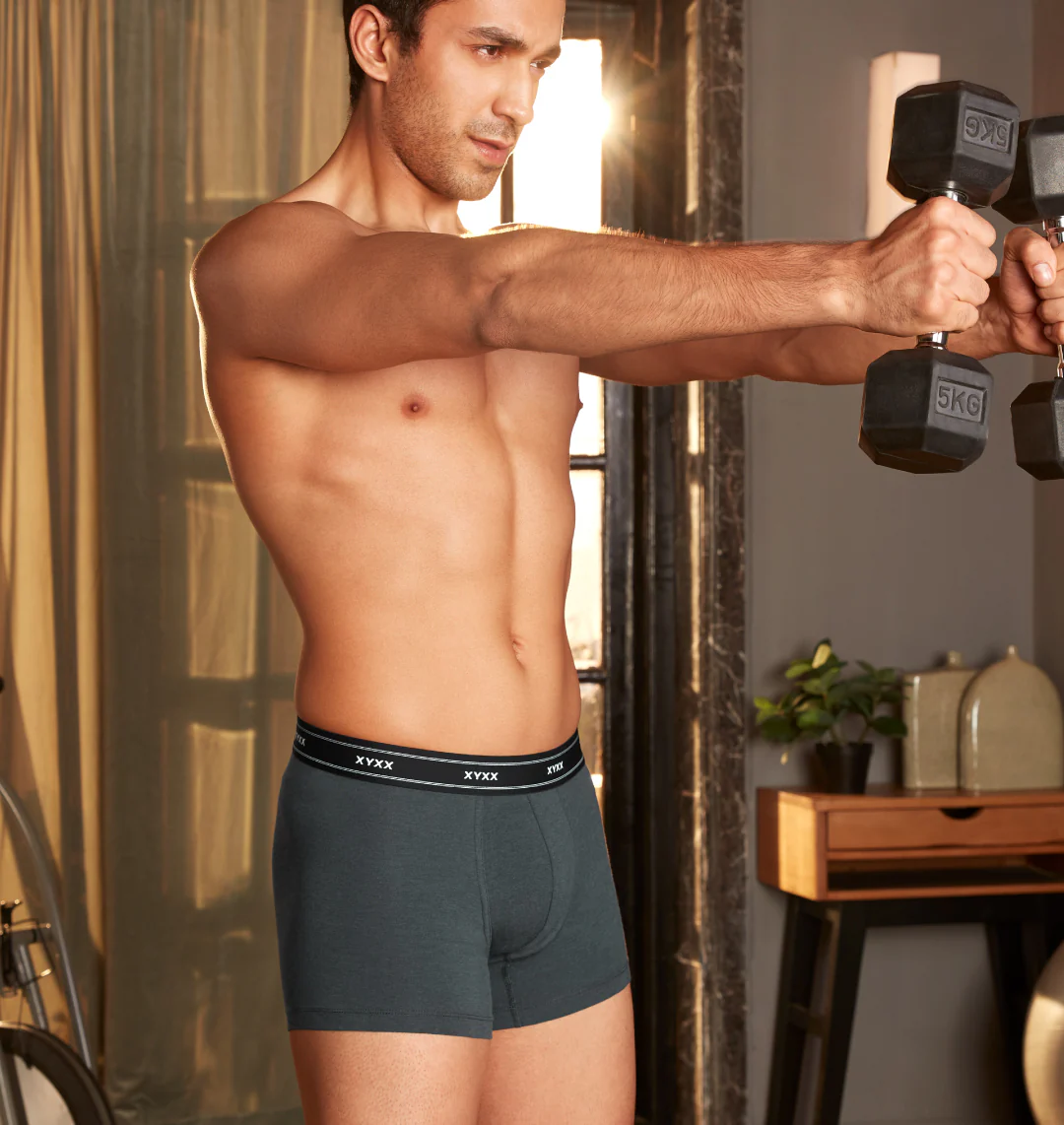
You’ve destroyed three pairs of underwear in six months. The waistband rolled and never recovered after rope climbs. The leg openings stretched permanently after a heavy deadlift set. The elastic under the waistband separated from the fabric after a month of daily washing.
CrossFit destroys gear. Your underwear is gear. Here’s what construction actually survives WOD conditions.
What Generic Athletic Underwear Can’t Handle
The cross-modal demands of CrossFit — max-rep barbell work, gymnastics movements, cardio, floor work — stress every construction feature of an athletic garment simultaneously. Synthetic athletic underwear engineered for running or cycling doesn’t account for this combination.
Rope climbs pull the waistband toward the back and the leg openings toward the top of the thigh in a way that no other sport replicates. Box jumps require the fabric to follow hip extension explosively. Rowing and bike erg require the waistband to stay put in a forward-hinge position for sustained intervals. Deadlifts at high intensity create heat and sweat conditions that accelerate the degradation of synthetic elastic components.
The durability test for CrossFit underwear isn’t a single session. It’s the washing frequency demanded by training five to six days a week combined with the mechanical stress of varied high-intensity movement.
CrossFit underwear fails at the seams, the waistband, and the elastic — in that order. The fabric that survives is the one built to handle mechanical stress alongside heat and chemical washdown.
What to Look For in the Best Workout Underwear for CrossFit
95/5 Organic Cotton-Elastane Construction
This specific ratio provides enough elastane for recovery stretch without creating a compression garment. The organic cotton provides durability — cotton fiber resists mechanical abrasion better than synthetic fabric blends under repeated high-intensity stress. The construction that handles rope climbs, burpees, and box jumps without fiber degradation requires both the stretch (elastane) and the structural integrity (high-quality organic cotton).
Reinforced Waistband Construction
The waistband failure mode in CrossFit is elastic separation — the elastic layer detaches from the waistband fabric under repeated dynamic stress. Look for waistbands where the elastic is integrated into the fabric construction rather than sewn to the inside surface. A cotton inlay under the waistband that bears mechanical load rather than relying solely on the elastic extends waistband life significantly. Mens organic boxers with integrated cotton-covered waistbands outperform basic elastic-sewn construction at this failure point.
Flatlock Seam Construction at High-Stress Points
The inner thigh seam is the first to fail under ground movements — burpees, sprawls, ground-to-overhead transitions. Flatlock seams that run parallel to skin rather than raised seams that create a ridge distribute movement stress across more surface area and resist failure under the repeated dynamic loading CrossFit creates.
Machine-Wash Durability at 60 Cycles Per Month
Training five days a week means 20+ washes per month. A CrossFit athlete puts their gear through 240+ wash cycles per year. Elastic degradation, pilling, and fabric thinning that appears after 50-100 washes matters in this use context in a way it wouldn’t for a casual wearer. High thread-count organic cotton and quality elastane resist this degradation longer than cheaper blends.
Breathability That Handles the Rest Periods
A CrossFit WOD combines 30-second max-effort intervals with rest periods, metcon formats with strength work, warm outdoor conditions with air-conditioned gyms. No fabric is optimal for all of these simultaneously — but cotton’s passive breathability and temperature regulation are more consistent across the range than synthetic fabrics optimized for one output level.
Practical CrossFit Gear Habits
Rotate enough pairs to wash after every session. Wearing the same pair multiple days degrades fabric faster through salt and acid accumulation than the washing itself. Enough pairs to always have a clean set is basic equipment hygiene for high-frequency training.
Cold wash, low heat dry — or air dry. High temperature washing and drying degrades elastic more than any other factor. Cold wash preserves construction integrity significantly longer. If machine drying, use low heat. Air drying is better.
Inspect seams monthly. Early seam stress is visible. A seam that’s fraying at the inner thigh on month two will fail during a WOD on month three. Replace before failure rather than after it.
Don’t mix CrossFit underwear with daily-wear rotation if you want maximum lifespan. High-intensity-washing-cycle gear that’s also being worn during daily wear through a full workday accumulates wear faster. Dedicated training pairs that only see training use last longer.
Why Construction Quality Is a CrossFit-Specific Concern
The durability narrative for athletic gear applies differently in CrossFit than in any other sport. A marathon runner puts their gear through continuous stress in one plane of movement. CrossFit puts gear through stress in every plane, under varying loads, across different moisture states, with the added variable of frequent washing.
The $15 synthetic brief that “works” for casual gym use fails at rope climbs. Not because rope climbs are uniquely harsh — because the combination of dynamic multi-plane movement, high washing frequency, and chemical sweat environments reveal construction weaknesses that lower-intensity activities hide.
Well-built organic cotton underwear doesn’t solve all CrossFit gear problems. But it outlasts synthetic alternatives at the specific failure points that end underwear life in a CrossFit context: seam integrity, waistband construction, and elastic durability under heat and chemical washdown.