
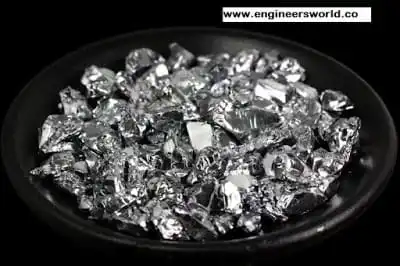
Metals have shaped human civilization for centuries, from ancient tools and weapons to modern skyscrapers, aircraft, and advanced machinery. While thousands of metals and alloys exist, only a select few earn a reputation for their remarkable strength. The concept of “strength” can vary depending on whether we talk about tensile strength, compressive strength, hardness, or yield strength. In this article, we are breaking down the top 10 strongest metals and exploring what makes them exceptional in high-performance and high-stress applications.
Understanding Metal Strength
Before exploring the strongest metals, it’s important to define what strength means in metallurgy. There are different measures of strength:
- Tensile strength: The resistance of a material to being pulled apart.
- Yield strength: The stress level at which a metal begins to deform permanently.
- Compressive strength: The ability to withstand squeezing or crushing forces.
- Hardness: Resistance to scratching, cutting, or surface wear.
Different metals rank differently depending on which type of strength is measured. The top 10 strongest metals on our list consider a balance of these properties along with industrial applications.
Tungsten: The Champion of Tensile Strength
Tungsten is one of the most celebrated strong metals, known for its incredibly high tensile strength of about 1510 megapascals. It also has the highest melting point of all pure metals, making it ideal for aerospace, defense, and industrial applications. Tungsten is widely used in electrical contacts, rocket engine nozzles, and even military-grade projectiles. Its strength is unparalleled, but its brittleness makes it difficult to work with.
Titanium: Lightweight Yet Powerful
Titanium is often considered the perfect balance between strength and weight. While not as strong as tungsten in raw numbers, titanium is exceptionally strong for its low density, making it highly useful in aircraft, submarines, spacecraft, and medical implants. Its tensile strength averages around 1000 megapascals, but its corrosion resistance and biocompatibility set it apart. Among the top 10 strongest metals, titanium is one of the most versatile.
Chromium: Hardness Defined
Chromium is famous for its extraordinary hardness, measuring 9 on the Mohs scale. This makes it one of the hardest elements on Earth. While it can be brittle in its pure form, chromium is vital in the production of stainless steel and other alloys, providing both hardness and corrosion resistance. It plays an essential role in creating durable tools, protective coatings, and high-strength industrial equipment.
Steel Alloys: Human-Engineered Strength
While pure metals are impressive, alloys often outperform them because they combine the best properties of multiple elements. High-carbon steel, maraging steel, and stainless steel rank among the strongest materials ever engineered. For example, maraging steel has an exceptional yield strength of over 2000 megapascals, making it indispensable in aerospace and defense industries. Steel alloys remain a cornerstone of modern construction and manufacturing.
Inconel: The Heat-Resistant Superalloy
Inconel is a nickel-chromium-based superalloy specifically engineered to withstand extreme temperatures and pressures. While its tensile strength is around 1000 megapascals, what makes Inconel remarkable is its ability to retain strength at temperatures exceeding 1000°C. It is heavily used in jet engines, gas turbines, and nuclear reactors where both heat and stress resistance are critical.
Osmium: Dense and Durable
Osmium is one of the densest naturally occurring elements, with a density higher than even tungsten. Its hardness and resistance to wear make it valuable in specialized applications, though its brittleness and rarity limit widespread use. Osmium is primarily used in electrical contacts, fountain pen tips, and high-wear instrument components. Its density and durability make it a standout among the top 10 strongest metals.
Titanium Alloys: Enhanced Power
While pure titanium is already strong, its alloys take performance to another level. Titanium-aluminum-vanadium alloys, for instance, are widely used in the aerospace industry due to their superior tensile strength and resistance to both fatigue and corrosion. These alloys demonstrate how science can amplify natural properties to create materials fit for extreme conditions.
Iridium: A Rare and Resilient Metal
Iridium is one of the rarest elements on Earth, yet it is also one of the toughest. Known for its extreme resistance to corrosion and high melting point, iridium is often used in high-stress electrical contacts, spark plugs, and scientific equipment. It is also used in making crucibles for growing single crystals in electronics. Its rarity makes it expensive, but its resilience ensures a place among the strongest metals.
Vanadium: Strength with Flexibility
Vanadium is a metal that is often overlooked but plays an essential role in strengthening steel alloys. By adding vanadium, steel becomes more resistant to shock and corrosion while remaining flexible enough for industrial applications. Its yield strength and ability to enhance toughness make it indispensable in construction, automotive, and aerospace industries.
Magnesium Alloys: Light but Strong
Magnesium by itself is not the strongest, but its alloys offer an impressive combination of low weight and strength. Magnesium-aluminum-zinc alloys, for example, are used in automotive and aerospace engineering to create lightweight yet durable parts. These alloys prove that strength does not always come with heaviness, making them vital in industries seeking efficiency and performance.
Comparing the Top 10 Strongest Metals
When breaking down the top 10 strongest metals, it becomes clear that each has unique strengths and weaknesses. Tungsten leads in tensile strength but struggles with brittleness. Titanium shines as a lightweight yet powerful option. Chromium offers unmatched hardness, while osmium and iridium stand out for density and durability. Alloys such as steel, Inconel, titanium alloys, vanadium-enhanced steel, and magnesium alloys demonstrate how combining elements creates superior strength profiles.
Applications of the Strongest Metals
The top 10 strongest metals are not just scientific curiosities—they drive the progress of modern technology. Aerospace relies on titanium and Inconel for strength under extreme conditions. Construction and automotive industries depend on steel and vanadium alloys for durability and resilience. Consumer goods like electronics benefit from chromium and osmium for wear resistance. Even medicine uses titanium for implants that combine strength with biocompatibility.
The Future of Strong Metals
As technology advances, the demand for stronger, lighter, and more efficient metals continues to grow. Researchers are experimenting with nanostructured metals, metallic glasses, and new superalloys that could surpass today’s benchmarks. With industries like renewable energy, space exploration, and defense pushing material science forward, the strongest metals of today may soon be replaced by even more advanced materials.
Conclusion
Breaking down the top 10 strongest metals reveals that strength is not one-dimensional. Each metal or alloy excels in its own category, whether tensile strength, hardness, heat resistance, or density. Tungsten, titanium, chromium, osmium, iridium, vanadium, magnesium alloys, Inconel, steel alloys, and titanium alloys represent the pinnacle of strength in materials science. Together, they form the backbone of modern technology, construction, and innovation, proving that human progress is built upon the foundation of the strongest metals known to science.